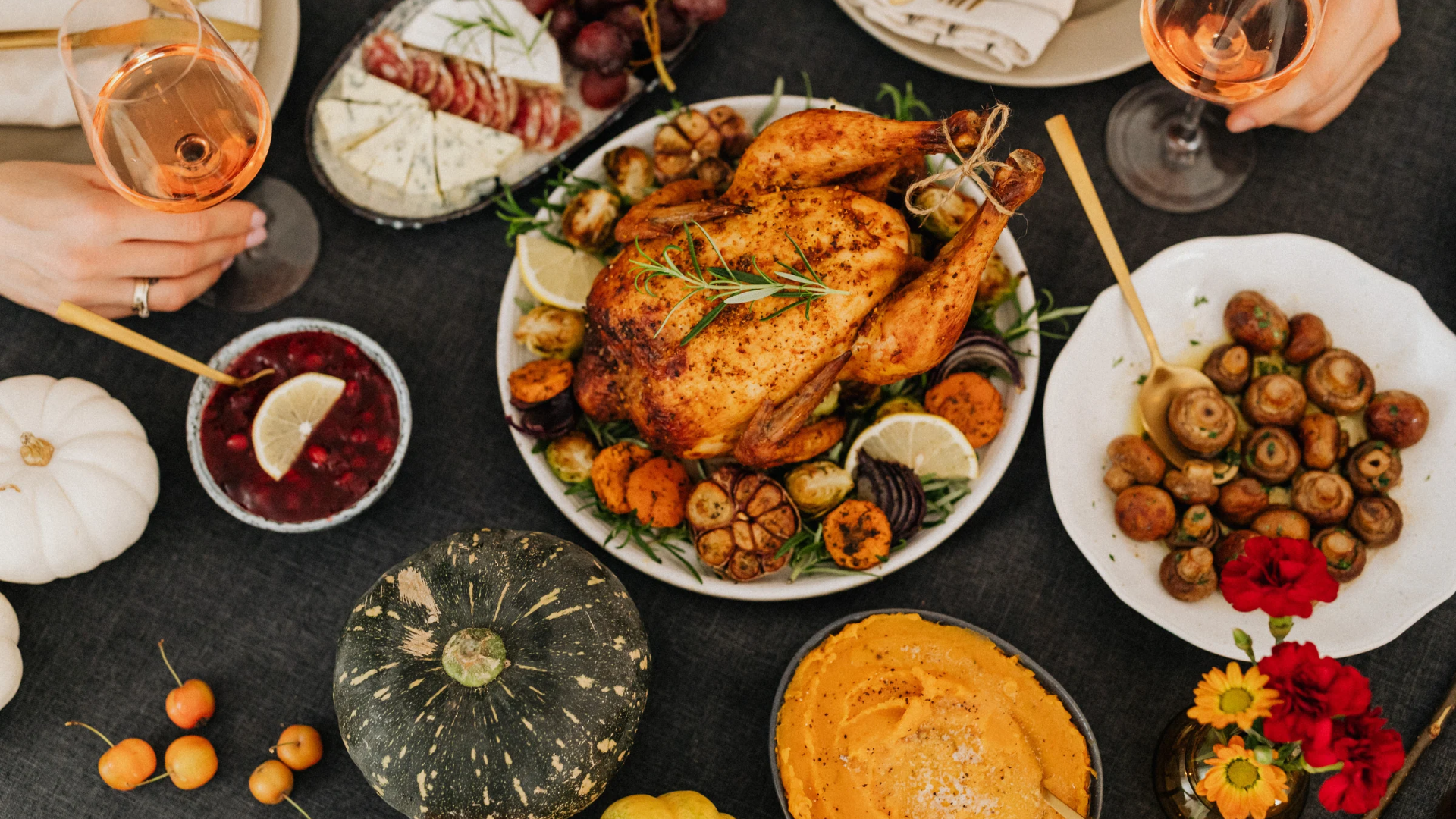
How to enjoy the day without being stuck in the kitchen.
Thanksgiving is one of the biggest entertaining days of the year—and one of the easiest days to overcomplicate.
There’s the turkey. The stuffing. The potatoes. The vegetables. The cranberry sauce. The gravy. The rolls. The desserts. The drinks. And, of course, all the people you invited because you actually want to spend time with them!
The secret to a successful Thanksgiving isn’t doing more on Thanksgiving Day. It’s doing more before Thanksgiving Day.
With a little planning and some smart make-ahead strategies, you can get most of the work done before your guests arrive. That means less rushing, fewer last-minute surprises, and more time around the table enjoying the holiday yourself.
Here’s your game-day strategy for a calmer, more enjoyable Thanksgiving.
Start With Your Thanksgiving Game Plan
Before you start chopping onions or making a shopping list, think about Thanksgiving as a series of stages rather than one giant cooking project.
Your goal is to answer three questions:
What can I make ahead? What needs to be done on Thanksgiving Day? And what absolutely has to happen at the last minute?
Once you divide your menu into those three categories, and consider the amount of oven space you have and the size of the casseroles that need reheating, the day becomes much easier to manage.
Make-Ahead
These are the dishes and tasks you can complete one or more days before Thanksgiving:
Cranberry sauce
Desserts and cookies
Pie dough and many pies
Salad dressings
Dips and appetizers
Certain vegetable dishes
Stuffing components
Turkey stock
Table decorations
Place settings
Beverage setup
Thanksgiving-Day Tasks
These are the things that are best prepared or finished on the day itself:
Roasting the turkey
Making gravy
Reheating prepared side dishes
Finishing vegetables
Tossing salads
Warming rolls
Carving the turkey
Last-Minute Tasks
Keep this list as short as possible.
Ideally, the only things you should be doing as your guests arrive are finishing a few dishes, putting food on serving platters, pouring drinks—and enjoying your company.
That's the goal.
Build Your Menu Around Your Oven
Here's a Thanksgiving strategy that's easy to overlook: your oven is a piece of real estate.
And on Thanksgiving, it's prime real estate.
If the turkey occupies your oven for several hours, don't plan a menu that requires five other dishes to bake at precisely the same time.
Instead, choose dishes that can be:
Prepared ahead
Cooked earlier and reheated
Finished on the stovetop
Served at room temperature
Assembled shortly before dinner
This is especially important in a small kitchen, where oven space, counter space, refrigerator space, and stovetop burners can disappear quickly.
A good Thanksgiving menu isn't simply a collection of delicious recipes. It's a collection of recipes that work together.
Make a Thanksgiving Timeline
Once your menu is set, work backward from your planned dinner time.
If you're serving dinner at 4 p.m., for example, don't simply write “cook turkey” on your schedule. Break the day into manageable steps.
The Day Before
Morning or afternoon:
Finish grocery shopping.
Make cranberry sauce.
Prepare desserts.
Make turkey stock if needed.
Chop onions, celery, herbs, and other vegetables.
Prepare stuffing ingredients.
Make salad dressing.
Wash and prep vegetables.
Later in the day:
Set the table.
Arrange serving dishes.
Put out serving utensils.
Chill beverages.
Organize appetizers.
Review your cooking schedule.
Then take a breath.
One of the best Thanksgiving preparations you can make is to stop cooking before Thanksgiving Day even begins.
Set the Table Early
There's no reason to wait until Thanksgiving afternoon to figure out where everything goes.
Set the table the night before—or even earlier if your schedule permits.
Put out:
Plates
Flatware
Glassware
Napkins
Serving dishes
Candles or other decorations
Place cards, if you're using them
Then take a moment to imagine the meal.
Where will the turkey go?
Where will the vegetables go?
Do you have enough serving spoons?
Is there room for the gravy boat?
Will guests be able to reach what they need?
This simple exercise can reveal problems while there's still plenty of time to fix them.
Read our blog post Fall Tablescapes & Decorating Ideas for Autumn for additional ideas on creating a welcoming Thanksgiving table.
Don't Forget the Drinks
Drinks deserve their own game plan.
Choose a few beverages rather than trying to operate a full bar throughout the meal.
You might offer:
A signature cocktail
Wine
Sparkling water
A seasonal nonalcoholic drink
Coffee and tea with dessert
Set up as much as possible before guests arrive.
If you're serving a self-serve beverage station, even better. It allows guests to help themselves while you concentrate on the food.
Prepare a Thanksgiving "Landing Zone"
One of the best ways to keep a small kitchen from becoming overwhelmed is to designate specific areas for specific jobs.
Create a place for:
Drinks: A counter, sideboard, bar cart, or separate table.
Appetizers: A spot where guests can help themselves without standing in front of the oven.
Dirty dishes: A designated area where plates and glasses can be stacked neatly instead of accumulating everywhere.
Finished food: A counter or table where dishes can wait until you're ready to serve.
This may sound like a small detail, but good traffic flow can make a surprisingly big difference.
Think About Your Turkey—Then Work Everything Else Around It
The turkey is the star of Thanksgiving, so your cooking schedule should revolve around it.
Before Thanksgiving Day, make sure you know:
Approximately how long your turkey needs to cook
When it needs to go into the oven
How long it should rest before carving
Where you'll carve it
What serving platter you'll use
And remember: resting time is part of your cooking schedule.
When the turkey comes out of the oven, you suddenly have valuable time to finish gravy, warm side dishes, toss a salad, and get everything onto the table.
Don't think of turkey resting time as downtime.
Think of it as your final cooking window.
Use the Refrigerator Strategically
Your refrigerator may become almost as important as your oven.
Before Thanksgiving, take a look inside and make room for the food you're actually going to need.
Group ingredients together when possible.
For example:
Turkey zone: Turkey, stock, butter, herbs and related ingredients.
Vegetable zone: Prepared vegetables and casseroles.
Dessert zone: Pies and other sweets.
Drink zone: Keep beverages somewhere guests can access without constantly opening the main refrigerator.
A crowded refrigerator can turn Thanksgiving prep into a game of culinary Tetris.
Give yourself some breathing room.
Give Every Dish a Serving Dish
Here's another simple trick: match each dish to its serving vessel before Thanksgiving Day.
Write down your menu and next to each item identify:
Serving bowl or platter
Serving spoon or utensil
Garnish
Final preparation
This prevents the classic Thanksgiving moment when the potatoes are ready but you can't find a bowl large enough to serve them.
You can even put a small sticky note on each serving dish identifying what will go inside.
It may look a little obsessive.
It works.
Have a Plan for Leftovers
Thanksgiving isn't finished when everyone leaves the table.
Before the meal, prepare containers for leftovers so you're not scrambling through cabinets looking for something to send home with Aunt Susan.
Have plenty of:
Food-storage containers
Foil
Plastic wrap
Resealable bags
Labels, if desired
And don't underestimate the value of sending guests home with leftovers.
It's generous, practical, and gives you less food to deal with the next day.
Your Thanksgiving Emergency Kit
Even the best Thanksgiving plan can encounter a surprise.
That's why it's smart to have a few essentials on hand.
Keep these nearby:
Extra butter
Extra stock or broth
Flour or cornstarch for gravy
Aluminum foil
Paper towels
Extra serving utensils
Food-storage containers
A sharp carving knife
Extra napkins
Plenty of ice
And one more essential:
A sense of humor.
The turkey may take longer than expected. The gravy may need adjusting. Someone may spill cranberry sauce on the tablecloth.
That's Thanksgiving.
Your guests aren't coming because they expect a restaurant kitchen.
They're coming to spend the holiday with you.
The 30-Minute Rule
Here's a simple goal worth adopting:
Try to have your kitchen under control 30 minutes before dinner.
That doesn't mean everything has to be perfect.
It means:
The turkey is resting.
The major dishes are finished.
The table is ready.
Drinks are available.
The kitchen is reasonably organized.
You have changed out of your cooking clothes, if necessary.
You have had a moment to breathe.
Then step away from the stove.
Your guests should see you—not the back of your head as you search through the oven.
Most Important: Enjoy Your Own Thanksgiving
The host is part of the celebration.
It's easy to become so focused on making Thanksgiving perfect that you miss the very thing you're trying to create: a wonderful gathering with people you care about.
So make the extra dish only if you really want to.
Accept help when someone offers.
Let guests pour their own drinks.
Don't worry if the table isn't magazine-perfect.
And if something doesn't go according to plan?
Serve it anyway.
The best Thanksgiving memories rarely come from perfectly timed gravy.
They come from the people around the table.
A little preparation simply gives you more time to enjoy them.